The product
BareBones Ticketing is the product. Everything else on this site exists to help you evaluate it, adopt it, and run it yourself.
Finlay.works
Finlay.works makes BareBones Ticketing: a self-hosted service desk for teams that have to show, later, who approved what. Structured intake, owned tickets, controlled workflows, and an audit trail you did not have to assemble, on servers you own. For each release the validation team designates a separate validation package, written for QA and compliance readers; Professional and Lifetime customers download it from their account.
Open the live demo or read the manual. Questions go in writing. Replies are written and asynchronous; allow several business days.
BareBones Ticketing is the product. Everything else on this site exists to help you evaluate it, adopt it, and run it yourself.
Each release carries an executed validation package, designated by the validation team; Professional and Lifetime include it as an account download.
Fit questions and implementation help are handled in writing, at the pace of a small vendor. Replies are written and asynchronous; allow several business days.
Product focus
Requests in a group mailbox and a tracking spreadsheet work — until someone has to show who approved what. BareBones Ticketing replaces that with structured intake, tickets that have owners, workflows you control, and evidence that builds itself, running on servers you own.
Each release carries an executed validation package, designated by the validation team; Professional and Lifetime include it as an account download.
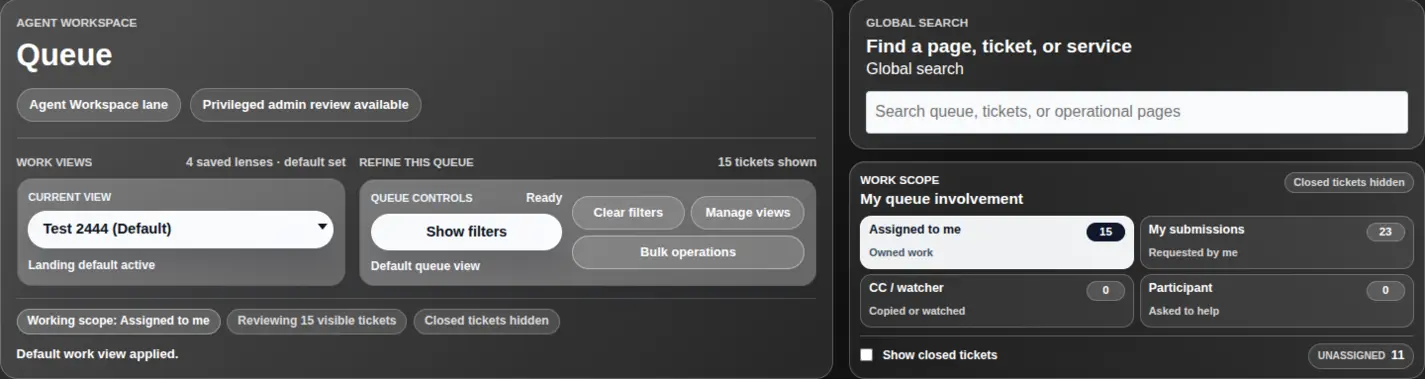
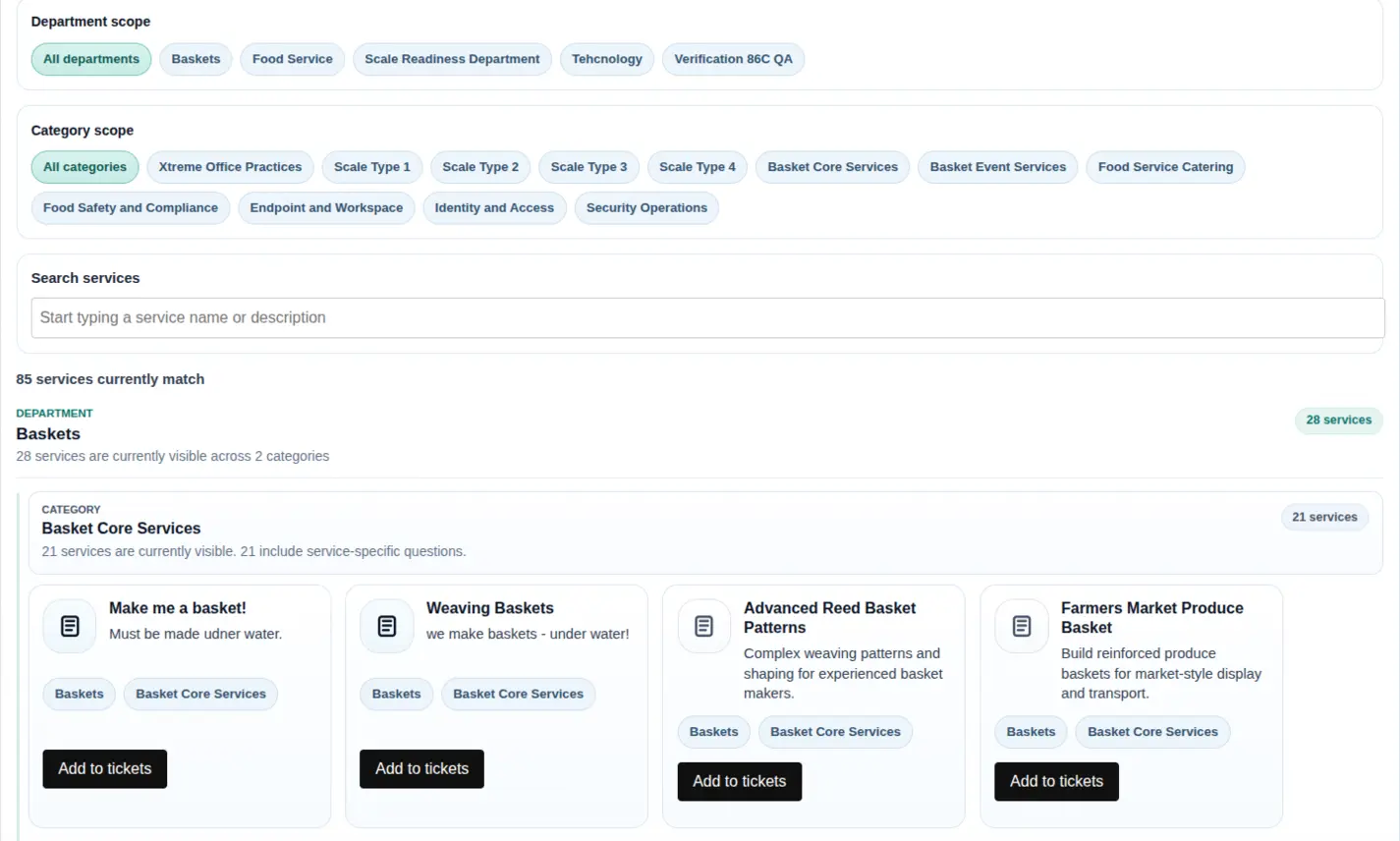
Queue signals, access posture, workflow context, and audit-minded operations.
Choose a path
See it running, read how it works, compare it against your operating problem, or ask in writing.
BareBones Ticketing is the flagship Finlay.works product for self-hosted service desk control.
View BareBonesA live demo with a worked service desk in it: sign in as any of nine roles. No install, no form, resets nightly.
Try the demoStart with the operating problem: self-hosting, access scope, workflow control, evidence, and buyer readiness.
Read the buyer guideSend the service desk problem in writing. Replies are written and asynchronous; allow several business days. Implementation help is scoped the same way.
Ask in writingRelated services
Finlay.works helps teams evaluate, plan, configure, and document self-hosted service desk work around BareBones Ticketing.
Help deciding whether BareBones Ticketing fits the way your team handles service work.
Help shaping the first useful operating path around BareBones.
Readable records so service teams can operate and hand off the system without guesswork.
How work runs
The process is designed to reduce human variability. Scope, decisions, and delivery notes are written and shared in plain language.
You send a short written brief with goals, constraints, and stakeholders.
We reply with written scope direction, useful questions, or a next-step estimate.
Work proceeds in small, documented checkpoints with written updates.
You receive documentation, credentials, and a clean wrap-up summary.
Values
Our values shape the way we work. The goal is honest service, careful stewardship, and respect for people—without pressure or manipulation.
If a request is unsafe, dishonest, or likely to cause harm, we will decline it plainly.
Read the full values statementTruthful estimates, transparent tradeoffs, and clear explanations even when the answer is no.
Responsible use of time, budget, and technology with long-term care in mind.
Respect for users, teams, and stakeholders, including their limits and their time.
Work that can be maintained, documented, and handed over with confidence.
Contact
Send the service management context once, in writing. A few paragraphs are enough to start a BareBones fit, service, proof, or procurement conversation.